


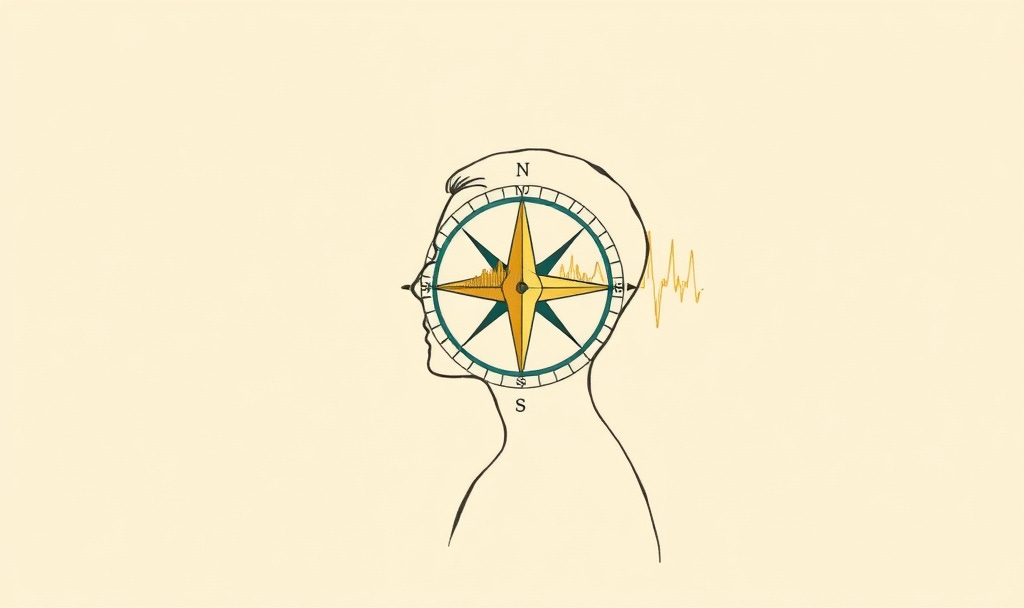
In my time, I have sat in front of many individuals and listened intently to what they say, what they ask, and what they believe. There are two distinct things happening in every one of those rooms. There is what a person thinks they believe or know, and there is what their energy says and what their body signals while they’re saying it. More often than not, the two are in conflict.
A person can tell you they have made peace with something and mean it completely, and their shoulders will still climb toward their ears the moment the subject gets close. They can recite the exact mechanism of their own healing, name the wound, trace its timeline, defend the insight in conversation, and their hand will still find their throat or their collarbone without them noticing it happened. The mind has closed the file. The body has not been told, or has been told and doesn’t believe it, or believes something the mind hasn’t caught up to yet.
I have also watched it run the other way. Someone insists they are not the kind of person who gets to rest, argues the position with total conviction, and their breathing has already slowed. Their sleep has already changed. Some part of them has quietly approved the very thing their mouth keeps refusing, and started acting on it before the argument in their head has finished.
Both directions point to the same thing. Belief is not a single position a person holds. It is at least two positions, kept in two different places, and they do not automatically agree with each other. Thought and logic live in one register. Energy and somatic signal live in another. When those two registers contradict each other, the person is not lying, and they are not confused in the ordinary sense. They are reporting from two different systems, each keeping its own account.
Which one do you trust — the sentence a person can say out loud, or the signal their body gives while they’re saying it?
Most work aimed at change addresses only the first register. It argues, reframes, reasons a person into a new sentence, and then wonders why nothing moves. The sentence was never the problem. The body was never in the room for the argument, and it does not update on the strength of a good paragraph. It updates through repetition, through safety proven over time, through the nervous system being shown, not told, that the old signal no longer matches the current situation.
You do not need a client’s chair to notice this in yourself. Say a sentence you believe is true — I am safe, I am enough, I am allowed to rest — and notice, without correcting it, what your shoulders do, what your breath does, whether your hand moves toward some part of your body without your permission. That movement is not commentary on whether the sentence is true. It is a separate report, running on separate evidence, and it is worth listening to as its own source rather than overriding it with a better argument.
Grief is where I see this most plainly. Someone will say, with complete sincerity, that they have accepted a loss, and their body will still brace at the sound of a phone ringing at the wrong hour. That is not denial. It is not incompleteness. It is a second ledger, kept by a different part of the person, still checking the current moment against old evidence, still filing its own report independent of what the mind has already settled. The two registers are not required to move at the same speed, and expecting them to is usually where the blockage sets in.
This is not limited to grief, and it is not limited to the therapy room. I was once in a strategic meeting with a CEO and a CFO where the words being spoken were confident, aligned, and rehearsed. Their bodies said something else entirely. The mismatch was not a hunch I decided to trust. It was a pattern I could discern in real time, and that discernment was the confirmation that let me act on it rather than talk myself out of it. I asked three questions, each one built from what the pattern had already shown me, and by the third question the conflict in the room, the hidden agenda underneath it, and the downright deception underneath both were sitting in plain view. That is not intuition in the loose, vague sense the word usually gets handed. It is Applied Intuitive Intelligence: the discipline of reading the second register accurately enough to act on it, in a room where getting it wrong costs a great deal more than a single session ever could.
If you have said the right words about your worth, your safety, your right to rest, and nothing has changed, the words were never where the resistance lived. If you have sat across a table from someone whose story added up and still felt wrong, the story was never where the truth lived either. Both are the same signal, read in two different rooms. The resistance, and the deception, are kept somewhere a sentence cannot reach, and any real movement — toward healing, or toward the truth of a negotiation — has to speak to that register in the language it actually keeps its records in: repetition, safety, and time, or in the boardroom’s case, pattern, confirmation, and the discipline to act on what has already been shown to you.
In my time sitting across from people, the sentence has almost never been the whole story. The signal underneath it usually is.
Thank you for reading Compass and Signal.